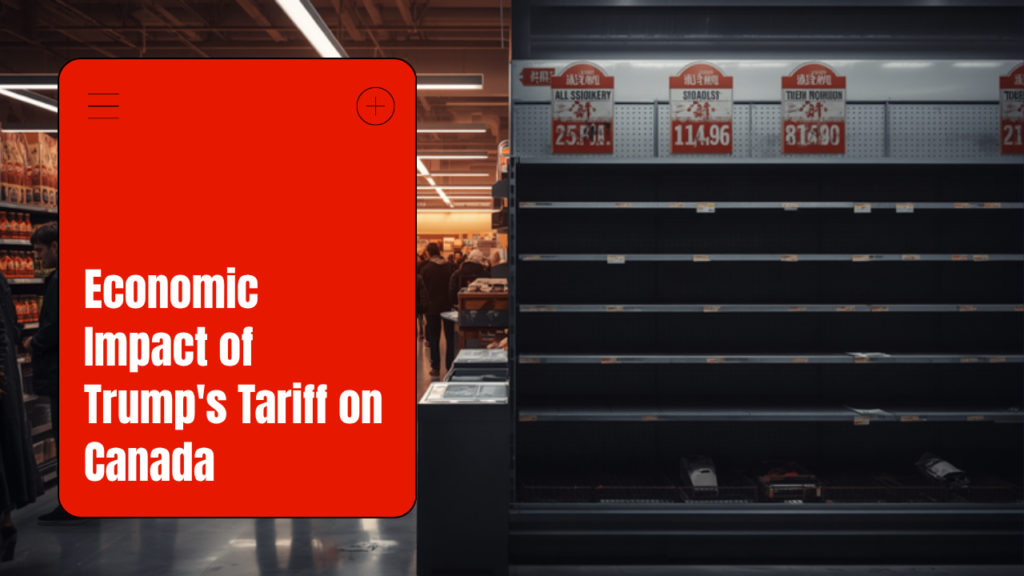
Here’s what nobody in Washington wants to say plainly: when the President slaps a 50% tariff on Canadian goods, the bill doesn’t land on Parliament Hill. It lands on the guy loading pallets at a distribution center in Franklin, the small manufacturer in the Menomonee Valley who buys Canadian steel, and the family in Sherman Park deciding whether cheese and produce prices just jumped again.
On July 21, President Trump imposed a 50% tariff on most Canadian goods, citing what he called unfair Canadian treatment of American autos, alcohol, and dairy. The list of affected products runs from wine to hockey sticks to cement — the kind of sprawling, blunt-instrument policy that sounds tough in a press conference and gets complicated fast once it reaches a supply chain. The tariffs take effect 30 days after signing, which means the countdown clock is already running for Wisconsin businesses trying to figure out what their costs look like in August.
I want to be straight about why this matters here, in a state that doesn’t always make the front page of the trade story. Wisconsin’s economy is more tied to Canada than most Americans realize. Canada is one of the state’s largest trading partners, especially in agriculture, and researchers who studied the tariff rounds from Trump’s first term found a consistent pattern: Wisconsin exports and imports both fell, and the costs landed on American consumers and American importers — not on the foreign government the tariffs were supposedly punishing. That’s not a partisan talking point. That’s what the data showed last time, and there’s no serious reason to expect a different result this time at double the rate.
The politics of “toughness” versus the math of a grocery bill
I’ve spent enough years covering policy from outside the party apparatus to recognize the pattern here. Tariffs are popular in a speech because they sound like defending American workers against a foreign competitor. But tariffs are a tax, full stop — paid by the American company that imports the good, and passed down the chain until it lands in a cart at Pick ‘n Save or a checkout counter at a hardware store on Milwaukee’s south side. The White House argument is that the pain is temporary, that manufacturers will relocate production to the U.S. rather than eat the tariff. That’s the theory. The problem, as trade economists have pointed out repeatedly, is that there’s not much evidence in the actual economic data of that shift happening at the pace the administration promises. Factories don’t relocate in 30 days. Grocery prices adjust in about that long.
And here’s where I part ways with both the people cheering this as economic patriotism and the people dismissing tariffs entirely as always bad policy. There is a legitimate argument for using trade policy to protect strategic industries — steel, autos, certain agricultural sectors where foreign subsidies genuinely distort the market. I’m not a free-trade absolutist who thinks every tariff is illegitimate. But a blanket 50% tariff across a huge basket of goods, timed and structured more like a negotiating threat than a targeted industrial policy, isn’t strategic. It’s a blunt instrument aimed in a direction that happens to include the people who can least afford the ripple effect.Who actually absorbs this
Milwaukee’s urban core has spent the better part of a decade climbing out of a manufacturing decline that hit Black and brown neighborhoods hardest. Foxconn promises came and mostly went. Real wage growth in the trades has been slow and uneven. Now add a tariff regime that raises input costs for the small and mid-sized manufacturers who actually did stay and adapt — the machine shops, the metal fabricators, the food processors who depend on Canadian dairy inputs or packaging materials. Those businesses don’t have the balance sheet of a multinational that can absorb a cost shock for a fiscal quarter while lobbyists negotiate an exemption. They pass the cost to the customer, or they cut hours, or both.
Meanwhile, on the consumer side, this lands during a period when housing costs, insurance, and everyday essentials have already been squeezing working families across Milwaukee and the broader Midwest. A tariff-driven bump in dairy and produce prices isn’t an abstraction for a household already stretching a paycheck. It’s the difference between a full cart and a cart with something put back on the shelf.
Neither party is being honest about this with you
This is where I think independent-minded readers — the ones who’ve written off both the reflexive “tariffs are economic nationalism, deal with it” crowd and the reflexive “any tariff proves Trump is destroying the economy” crowd — deserve a clearer conversation. The Trump administration is selling this as strength and leverage against a supposedly unfair trading partner. Fine, make that case with specifics. But don’t pretend the domestic cost is zero, because it isn’t, and Wisconsin’s own trade history says so.
On the other side, critics reflexively opposing any and all tariffs often ignore that Canada does maintain real protectionist measures of its own in dairy specifically, through supply management systems that cap American access to the Canadian market. That’s a legitimate grievance. The dishonesty isn’t in raising the issue — it’s in pretending a sweeping 50% tariff, applied broadly rather than surgically, is the proportional or well-targeted response to a specific dairy access dispute.
What I’d actually want from leadership here
If you represent a Wisconsin district, urban or rural, your job right now is not to cheer or jeer this policy on cable news. It’s to get in front of your constituents — the small manufacturer in your district, the grocery chain buying Canadian produce, the union local whose members work in a plant that depends on cross-border supply chains — and tell them plainly what the exposure looks like over the next two quarters. It’s to push for the narrowest, most targeted version of this policy that still addresses the legitimate dairy access complaint, instead of a blanket levy that catches hockey sticks and wine in the same net as the products actually in dispute.
And if you’re a reader in Milwaukee trying to plan a budget, the practical advice is unglamorous but real: expect grocery and household goods costs tied to Canadian imports to move over the next 30 to 60 days, and if you run a small business with any exposure to Canadian suppliers, get ahead of your cost projections now rather than after the invoice shows up.
I didn’t come home from deployment to watch Washington treat trade policy like a cable news food fight while working families absorb the consequences quietly. This is a solvable problem with a targeted trade fix. What we’re getting instead is a headline. Milwaukee will be paying for that headline before Ottawa ever feels it.