Two things are true at the same time, and both of them matter.
First: on July 13, the U.S. Department of Health and Human Services and the Department of Veterans Affairs signed a memorandum of understanding to jointly advance research, clinical development, and — if the FDA eventually approves them — responsible deployment of rapid-acting psychedelic therapies for veterans dealing with serious mental health conditions. This is a real shift. For years, psychedelic-assisted therapy research for PTSD lived on the margins of federal health policy, funded mostly by private foundations and advocacy groups pushing against institutional caution. Having HHS and the VA formally align on accelerating this research is the kind of bureaucratic move that doesn’t generate headlines but can genuinely change what’s available to veterans in five years.
Second: a national VA health study has found that roughly 22 percent of Black veterans who deployed developed PTSD, compared to 14.1 percent of white veterans. That’s not a small gap. That’s a documented, measurable disparity in one of the most consequential health outcomes a service member can carry home, and it exists inside a system — the VA — that is supposed to treat every veteran identically regardless of race.
I want to be the first to say: I’m glad the psychedelic therapy partnership exists. Anything that expands the treatment toolkit for PTSD is worth taking seriously, and rapid-acting treatments in particular matter because traditional first-line treatments for PTSD can take months to show effect, months during which veterans are still living inside the symptoms — the hypervigilance, the sleep that won’t come, the anger that surprises even the person feeling it. If a new modality moves faster, that’s not a luxury. That can be the difference between someone staying in treatment and someone walking away from it.
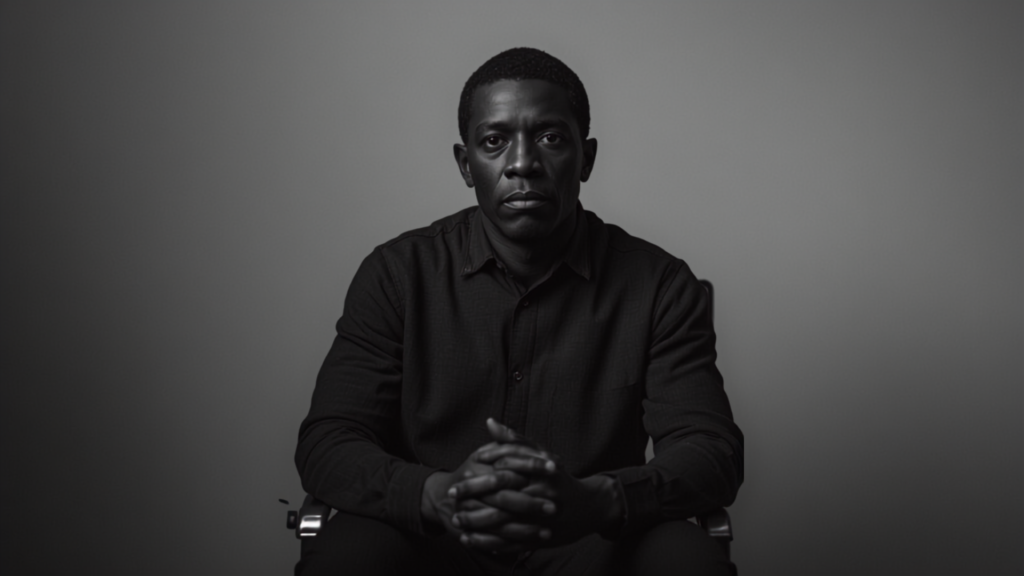
But new treatment pipelines don’t automatically close disparities in who gets diagnosed, who gets referred, and who gets believed in the first place. That 22-versus-14 percent gap isn’t primarily a biology story. It’s a story about cultural stigma that runs deeper in some communities than others, about racial disparities in how symptoms get read and coded by clinicians, and about a documented shortage of mental health providers who understand the specific texture of what it’s like to be a Black man who served, came home, and is now expected to explain his pain to someone who has never had to translate it across a cultural gap before even getting to the clinical one.
I’ve sat in those rooms. I’ve been the veteran trying to describe something that doesn’t translate cleanly into a symptom checklist, watching a provider who means well but doesn’t quite get it. That gap — not a lack of new drugs, but a lack of cultural fluency in the rooms where care actually happens — is what keeps a lot of Black veterans from ever getting to the point where a new psychedelic protocol would even be offered to them. You can’t fast-track your way past a trust deficit that took generations to build.
So here’s the both/and I’d ask the VA and HHS to hold as this partnership moves from MOU to actual clinical protocol: expand the treatment pipeline, absolutely — and build the disparity data collection into the research design from day one, not as an afterthought once the trials are already running on a population that skews toward whoever already trusts the system enough to enroll. Community-based mental health efforts are already trying to do some of this work on the ground — Louisville’s Black Men’s Mental Health Conference earlier this month is one example, bringing panel discussions on reentry, addiction recovery and career pathways directly into a space designed for Black men rather than adapted for them. That kind of infrastructure, run by and for the community it serves, has to be part of how any new federal treatment eventually reaches the veterans who need it most, because a clinical breakthrough that never reaches the population with the highest documented PTSD rate isn’t actually a breakthrough for them. It’s a breakthrough with a distribution problem.
Progress and disparity aren’t opposites here. They’re running on parallel tracks, and the second one doesn’t close itself just because the first one is moving.
— Marcus Hart