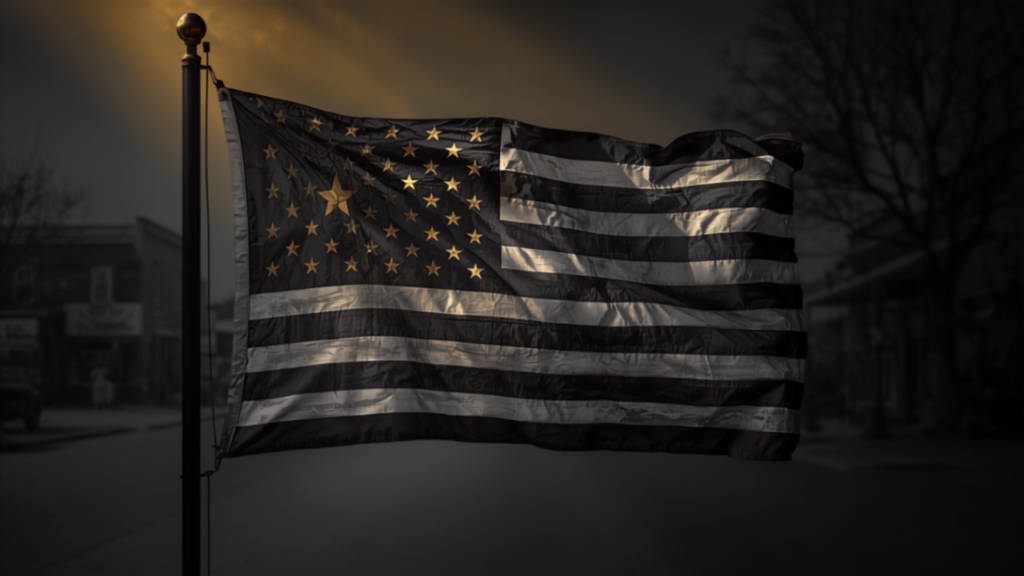
Somewhere around the third week of July, it became clear that America’s 250th birthday wasn’t going to be the unifying national moment a lot of planners hoped for back when America 250 was first conceived years ago. Polling out this month shows nearly a third of Americans worried about the country’s direction, and close to half saying the nation has drifted far from its founding principles. Critics of the flagship “Great American State Fair” event in Washington argued the celebration had been bent into something closer to a campaign rally than a national commemoration. Meanwhile, a fresh round of tariffs and the quiet elimination of SNAP-Ed, the federal nutrition education program, landed in the same news cycle as the fireworks, giving people two very different lenses through which to view the summer’s patriotic programming.
I watched a chunk of this online and a chunk of it in person, because that’s part of the job, and I want to say something that might sound counterintuitive coming from someone who has worn this country’s uniform: I don’t think the division is the scandal. I think the expectation that a single planned event could paper over it was always the naive part.
America has never actually agreed on what it’s celebrating. That’s not cynicism, it’s history. The same summer of 1776 that produced the Declaration of Independence produced a document written by men who enslaved human beings while declaring all men created equal, a contradiction the country has been negotiating, sometimes violently, ever since. Frederick Douglass’s 1852 speech asking what the Fourth of July means to the enslaved wasn’t a footnote to American history; it was a central American argument, made by a Black man who loved the country enough to demand it live up to its own words. Two hundred and fifty years in, we’re still having some version of that argument, just with tariffs and state fair budgets standing in for the specifics.
What frustrates me about the coverage I’ve seen is how quickly it collapses into “America is more divided than ever,” a phrase that gets recycled every election cycle like it’s a new discovery. It flattens something more interesting and more useful: Americans aren’t simply split into two camps who disagree about facts. A lot of the division is about which American story gets center stage, the founding-as-triumph story, or the founding-as-unfinished-promise story, and most people, if you actually sit with them, hold pieces of both without much internal contradiction. I know plenty of veterans, myself included, who can stand and salute that flag with real emotion and, in the same breath, tell you exactly where this country has failed people who look like us. That’s not confusion. That’s a mature relationship with a complicated country.
Where I’ll push back on the “unity” framing pushed by official America 250 messaging is this: manufactured unity that asks people to set aside legitimate grievances for the sake of a good television moment isn’t unity, it’s suppression with better lighting. If the state fair felt like a rally to critics, that’s worth taking seriously as a design failure, not dismissing as partisan whining, national commemorations that only speak to one political coalition aren’t national commemorations, they’re campaign events with better catering. At the same time, I’d push back just as hard on people who used the 250th purely as an occasion to list grievances with no acknowledgment of what’s actually been built and improved in this country’s history, including by the very movements that criticized it loudest. Both moves, the flag-waving that ignores the wound, and the grievance that ignores the progress, are half a story pretending to be the whole one.
The SNAP-Ed elimination landing in the same week matters here too, and not just as an aside. It’s a reminder that the “state of the union” conversation isn’t really about fireworks and flags at all, it’s about whether the material conditions of people’s lives back up the mythology being sold to them on a given weekend. You can watch a drone show over the National Mall and still go home to a neighborhood where a federal nutrition program just disappeared with almost no public notice. Both things are true about America at 250. Neither cancels the other out.
If there’s a solution-oriented takeaway here, it’s this: stop expecting a single ceremonial year to resolve a 250-year argument, and start paying attention to whether the institutions doing the actual work of the country, nutrition programs, voting access, veterans’ care, are getting stronger or weaker underneath the fireworks. That’s the real measure of where America stands. The fair ends. The argument about who this country is for doesn’t, and it shouldn’t. That argument, honestly conducted, is the most American thing we do.