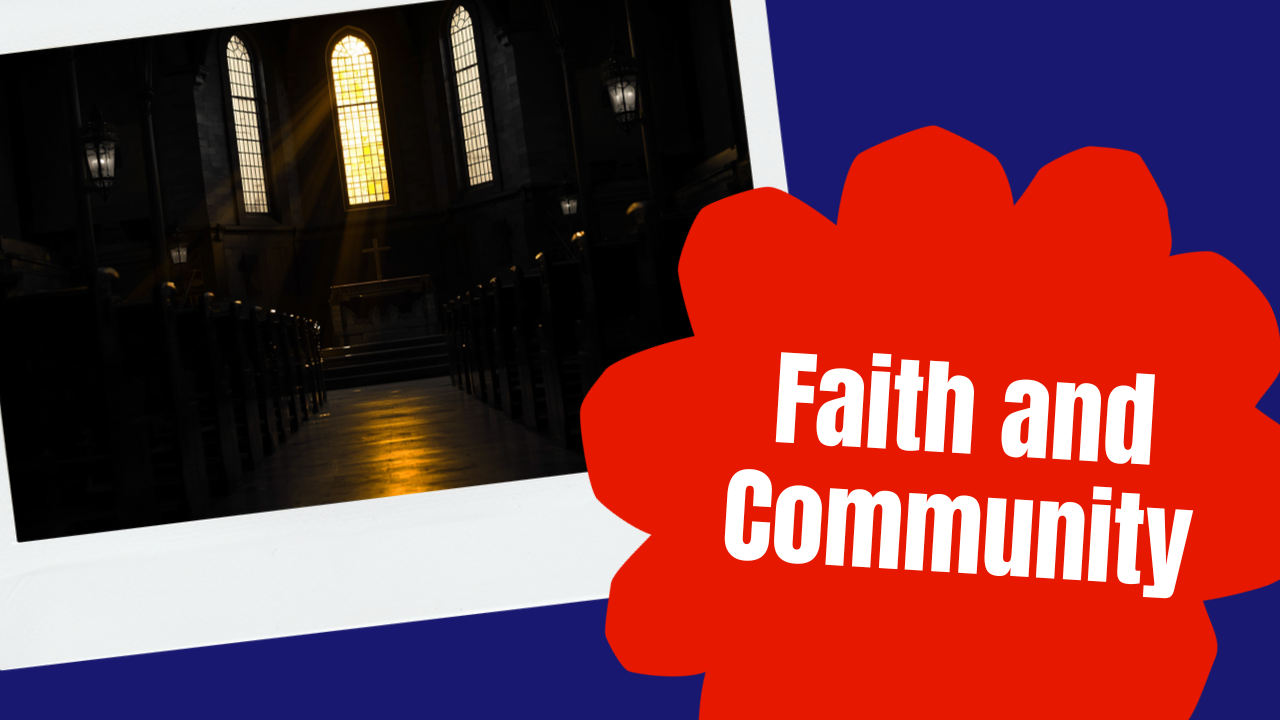
Two things are true in American religious life right now, and most coverage treats them as one story when they’re really two, and neither one describes where I sit.
First: organized religion is shrinking. Church adherence in the U.S. has been falling for years, a trend that’s held steady through 2026. Second: the religious right is politically ascendant, with defenders of a specific brand of Christian nationalism occupying real positions of power in Washington. Put those together and the media narrative writes itself — faith is dying, except among the people using it as a political weapon.
I’m a combat veteran turned journalist who reads scripture and believes in something bigger than myself, and that story doesn’t describe me, and it doesn’t describe most of the Black faith community I grew up in and still move through. We’re not shrinking at the same rate, and we’re not the religious right the headlines mean when they say it. We’re the part of the story nobody’s telling.
Faith as Lens, Not Weapon
Here’s the distinction that gets lost: for a lot of the political religious right currently ascendant in Washington, faith functions as a wall — a boundary marker for who’s in and who’s out, a justification for policy positions arrived at first and scripture-matched second. That’s not how faith operates in most of the Black churches I know in Milwaukee. It’s a lens. It’s the thing that shapes how you read a policy question, not a stamp you put on an answer you already had.
That’s a real difference, and it matters for how Black faith communities should be read politically. The assumption in a lot of national coverage is that religiosity predicts a rightward political lean. It doesn’t, not cleanly, not in Black churches. You’ll find deeply devout congregations in this city that will preach personal responsibility and family structure on Sunday and organize for criminal justice reform and expanded healthcare access on Monday. That’s not contradiction. That’s faith as an actual moral framework instead of a partisan accessory.
The Discrimination Angle Nobody’s Covering Locally
Religious Freedom Week coverage this summer focused heavily on faith organizations’ ability to participate in public programs without being disqualified for their religious character — a real issue, but one that in national coverage gets framed almost entirely around white evangelical and Catholic institutions. Black churches face their own version of this fight, often with less lobbying infrastructure behind them: churches running food pantries, reentry programs, and after-school programs that get tangled in the same public-funding eligibility fights, but without the same national advocacy apparatus amplifying their case.
If religious freedom in public life is going to be a real conversation in 2026, it needs to include the Black church basement running a reentry support group for guys coming home from Waupun, not just the mega-church fighting a zoning board.
Why This Matters Beyond Sunday
I don’t write about faith to proselytize, and I’m not going to pretend UNJ is a devotional outlet. But I’d be dishonest with you if I pretended faith wasn’t a real, operative force in how a huge share of this readership makes sense of a chaotic political moment — and dishonest reporting that flattens all of American Christianity into “declining” or “ascendant right” misses where a lot of us actually live: still showing up, still believing, still organizing, and doing it without signing onto either the culture-war script or the abandonment-of-belief script.
The solution here isn’t complicated, it’s just underreported: outlets covering faith and public life need to stop treating “the church” as a monolith with two settings. Black faith communities in cities like Milwaukee are running some of the most effective, least-funded social infrastructure in this state — reentry ministries, food security programs, mental health first-responder partnerships between congregations and county services. That’s a story about faith intersecting public life that doesn’t need a culture war frame to be worth telling. It just needs someone to show up and cover it like it matters, because it does.