I spent a decade in rooms full of men who’d been told exactly one story about what they were for. Provide. Protect. Don’t flinch. Don’t talk about it after. That story worked fine right up until it didn’t — until the discharge papers, the layoff notice, or just the quiet 2 a.m. realization that being needed and being known are not the same thing.
That tension is now a full-blown national conversation, and depending on which corner of the internet you wander into, you’ll hear it framed as a crisis of masculinity, a backlash against feminism, a referendum on fatherhood, or proof that men are either the last oppressed class in America or the last group nobody’s allowed to criticize honestly. I’d like to offer a third option, because I don’t think either extreme is describing what I actually see happening in Milwaukee, in Oak Creek, in barbershops and men’s groups and church basements across this country.
Men aren’t picking a side in the culture war over masculinity. A lot of them are quietly opting out of it altogether and picking something else instead: belonging.
The provider story ran out of runway
For most of American history, working-class and urban men — Black men especially — had one dominant script for proving their worth: bring home a check, keep the lights on, don’t complain. Researchers who study masculinity across urban, suburban, and rural America have long noted that the “provider” identity carries different weight and different risk depending on where you live and what you look like doing it. In cities, that script collided hardest with deindustrialization, mass incarceration, and wage stagnation — meaning several generations of men were handed a job description the economy quietly stopped paying for.
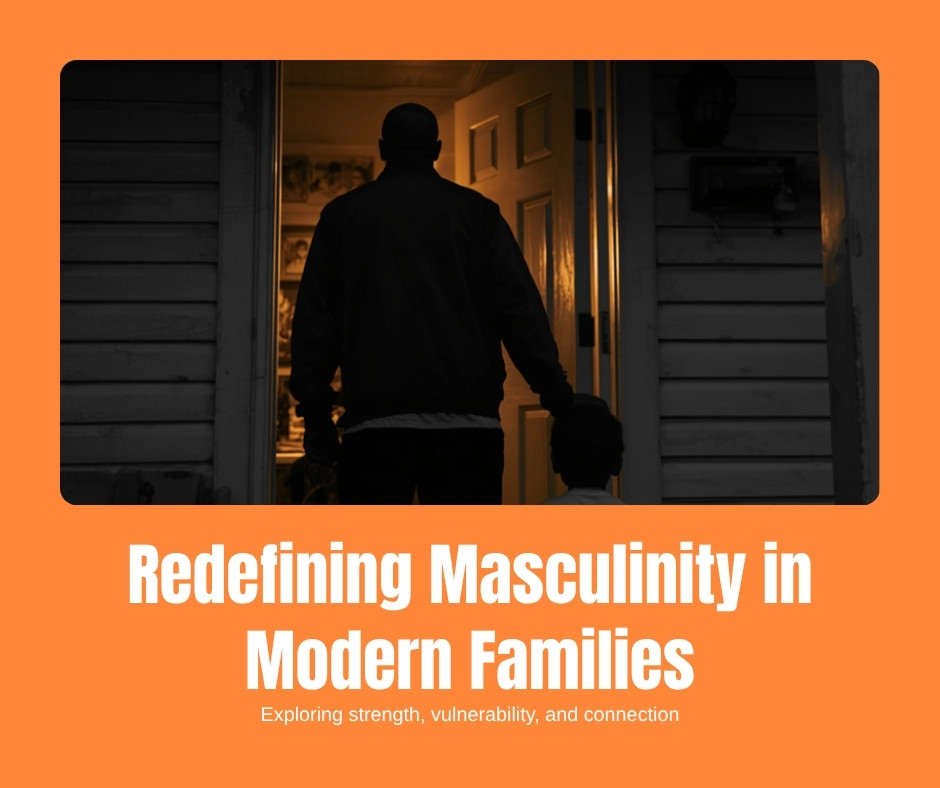
What I’m watching happen in 2026 isn’t a rejection of responsibility. It’s an update to what responsibility means when the paycheck story stopped being reliable. Analysts tracking cultural trends this year have pointed to something real: people, and men in particular, are retreating into smaller circles of meaning — family, community, ancestry, ritual, regional identity — not as a retreat from modernity but as insulation against it. That tracks with what I see. The dad picking his kids up from Milwaukee Public Schools every day at 3:15 isn’t performing a TikTok trend. He’s rebuilding a version of manhood that doesn’t require a corner office or a title to be legitimate.
Two stories are competing for the same men
Here’s where I want to be honest instead of tidy, because UNJ doesn’t do cheerleading for any tribe, including my own. There are two competing narratives trying to claim these same men right now, and they’re responding to identical pressures — economic uncertainty, loneliness, a shifting sense of purpose — with opposite prescriptions.
One narrative is grievance-based: it tells men the culture has turned on them, that accountability is really just humiliation in disguise, and that the fix is to go back to a version of authority that treated softness as weakness. You’ve heard this voice. It’s loud, it’s online, and it profits off keeping men angry rather than getting them well.
The other narrative — the one I’d argue is actually gaining ground, quietly, without a hashtag — says something closer to what my faith tradition has always taught: that strength and tenderness were never opposites, that a man’s worth was never only in what he earns, and that showing up consistently for the people in front of you is a harder and more legitimate form of masculinity than dominance ever was. This is the version I watched veterans build for each other in transition programs. It’s the version I see in Black fatherhood groups meeting in church fellowship halls on the north side. It doesn’t trend. It just works.
Why this matters beyond the internet argument
This isn’t an abstract debate. The mental health data on Black men — which I’ve covered in this publication before — is downstream of exactly this identity confusion. When the only acceptable story a man has for his worth collapses, and no honest replacement is offered, that’s where despair moves in. The men doing the quiet retreat into family and community aren’t just making a lifestyle choice. Many of them are doing the only intervention available to them, because the therapist’s office is expensive, the waitlist is long, and there still aren’t enough Black clinicians to go around.
I don’t think masculinity needs saving by either the grievance camp or the “toxic masculinity” panic camp. I think it needs rebuilding, brick by brick, in the same unglamorous places it’s already quietly being rebuilt — kitchen tables, recovery meetings, deacon boards, youth football sidelines. Solution-first means naming what’s actually happening instead of what’s most shareable.
What actually helps
If you’re a man reading this and you recognize yourself in either version of this story — the anger or the exhaustion — the exit isn’t isolation and it isn’t outrage. It’s proximity. Find the men who are already doing the quiet version of this: the coaching gig, the mentorship program, the men’s ministry, the veterans’ peer group. Milwaukee has more of these than people realize; they just don’t have marketing budgets. Show up once. Then show up again.
For the rest of us — parents, pastors, employers, policymakers — the job is to stop importing a national shouting match into local institutions that are actually doing the work. Fund the mentorship programs. Protect the fatherhood initiatives from being the first line item cut. And stop acting shocked that men are looking for belonging instead of applause. That’s what we’ve always needed. The culture just finally noticed.